
G-quAI
Combining AI and quantum computing in the fight against gastroin testinal cancer
01/10/2024 - 30/09/2028
Research Area
Robotics and Artificial Intelligent Systems
Interdisciplinary Field
Health
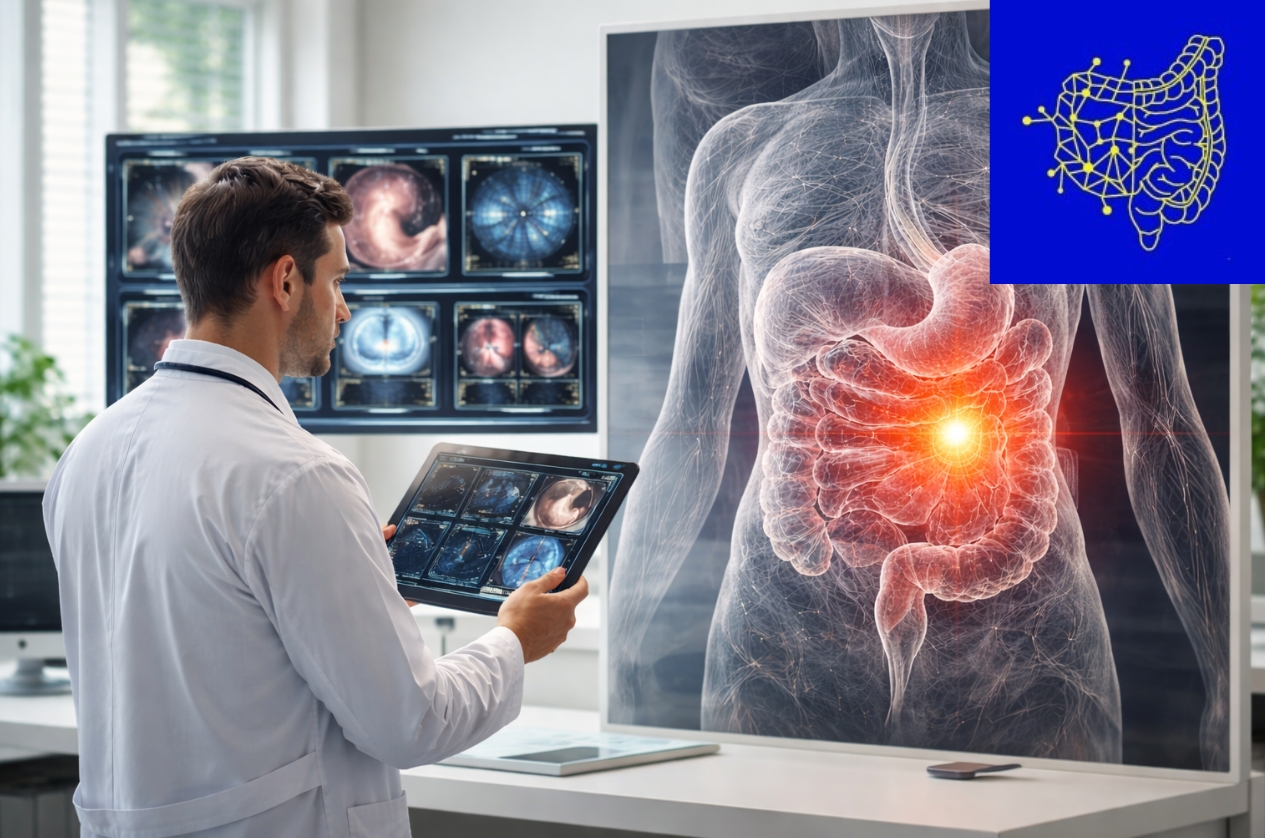
More than 2 million new cases of colorectal cancer are diagnosed every year around the globe. The entire global population, living anywhere on earth, above the age of 45 50 can be potentially affected by this challenge. Colorectal cancer remained the second leading cause of cancer-related deaths, accounting for 12 to 14% of all cancers recorded in Europe in 2012, and contributes U$14 billion to annual healthcare costs in the United States alone. In Asia, incidence rates range from 49.3 in Japan, 24.7 in South Korea, and 35.1 in Singapore, and they are equally high in many African and South American countries, turning this into a global challenge. Current scientific breakthroughs enable the development of non-invasive, high-quality imaging, energy-efficient, and miniaturized electronic devices that can travel inside the gastrointestinal tract using natural body cavities. Applying this technology to the screening of large groups, once they reach the age of 45 50, can significantly lower the number of new cases in an advanced stage of progression that are diagnosed every year.
Conventional computing, implementing for instance Convolutional Neural Networks, transfer learning, and ensemble learning, struggle with the computational load of analysing billions of hours of track images used. By using quantum computing, it could be possible to solve some complex optimisation and pattern recognition tasks more efficiently than classical computers. Quantum algorithms such as Quantum Neural Networks and Quantum Support Vector Machines could enhance the efficiency and accuracy of image analysis, and quantum features space could provide more nuanced insights from the data, potentially improving detection rates.
Funding entity
N/A
Role of ISR
Other
Other participating institutions
Universidade de Coimbra (UC)