
History
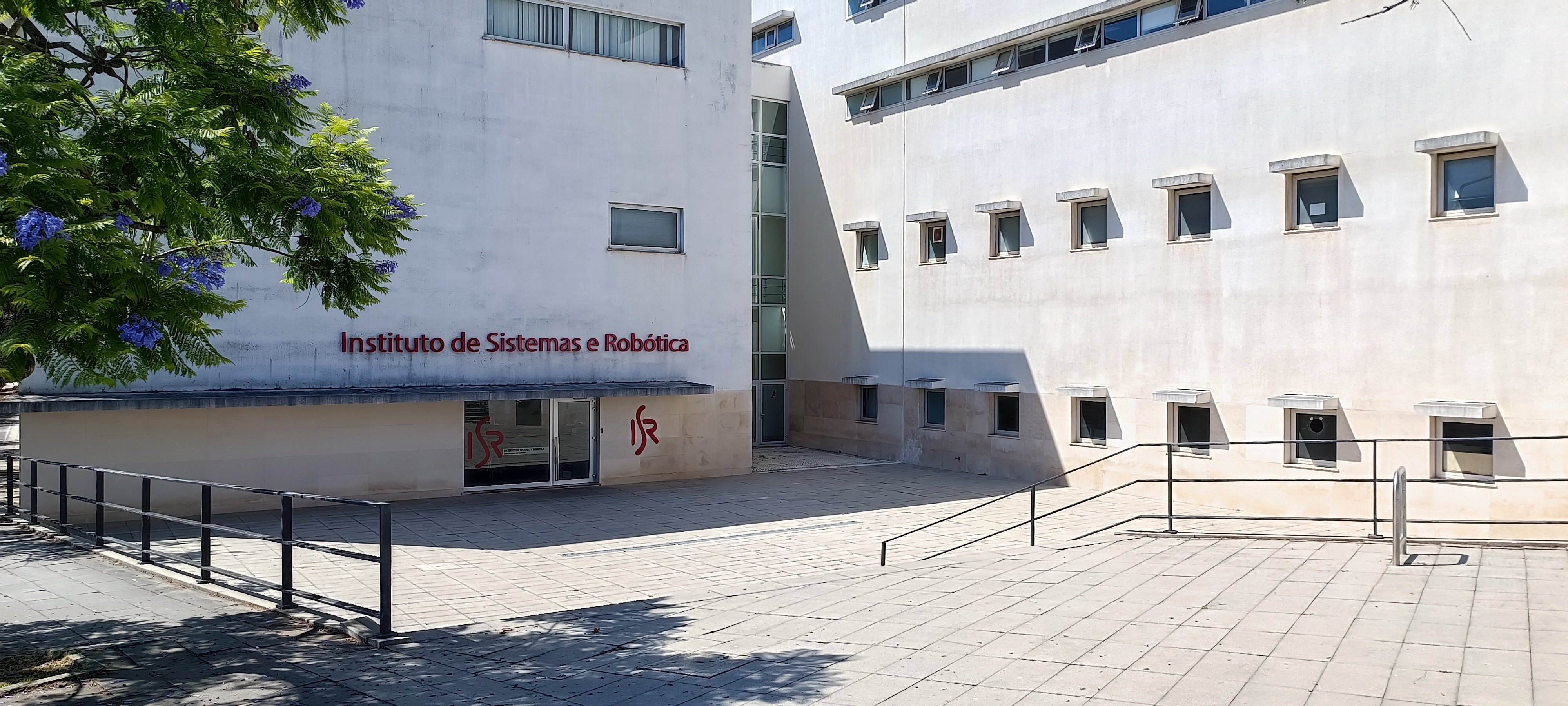
The Institute of Systems and Robotics, based in the University of Coimbra (ISR-UC) is a private, non-profit research institution founded in 1992 with the global purpose of setting up a first class multi-disciplinary research team, able to carry out leading edge research in several important areas of science and technology, with a special emphasis in systems and robotics. ISR has modern laboratories, in which a large variety of state of the art, electronic components and advanced materials are used and to support innovative work. ISR-UC develops research activities in four areas with significant scientific interaction and technological synergies:
Advanced Materials & Sensors
The main research stream of this area is development and characterization of novel materials and fabrication techniques for printed and thin-film electronics and soft-matter electronics. This team has demonstrated applications of these circuits in smart plastics and textile, health monitoring including biomonitoring patches that already reached to the clinical pilot stage, and more demanding applications for implantable electronics. The research area is already counting with a European Research Council ERC-Consolidator grant (2023-2027), and implemented 3 laboratories of material synthesis, digital fabrication, and Electron Microscopy and Characterization.
Robotics and Artificial Intelligent Systems
Research in RAIS covers theoretical advancements and practical applications: Enhancing reliability of deep-learning architectures, with probabilistic explainability, for safety; Critical applications; Resilient sensory perception in extreme conditions; Developing efficient algorithms for applications in Robotics, Machine Learning, and AI; Exploring human-centered robotics/systems; Advancing medical minimally invasive robotics for surgery, diagnosis, and rehabilitation; Path planning for long-term operation; Addressing complexities in industrial processes through self-learning and adaptation.
Perceptual and Cognitive Systems
The research in this area covers: Biometrics: novelties in learning architectures and the improvement of the several facial recognition systems; Improvement of the security of visual content: achieving good accuracy in printer-proof steganography with applications in the security of ID documents; Analysis of endoscopic imagery for computer assisted surgery and diagnosis; Analysis of images from capsule endoscopy for computer assisted diagnosis; Analysis of images from deformable objects; Solutions to incorporate causality and counterfactual inference principles in deep learning to enhance their interpretability, namely, Causal Representation Learning, Counterfactual Learning and Knowledge Distillation.
Sustainable Energy Systems
In Sustainable Energy Systems, the main global objectives deal with advanced energy-efficient technologies, as well as renewable and energy storage technologies in the scope of industrial andbuilding systems, and electric vehicles. The activities are mainly focused on: Energy Efficient Technologies including the development and assessment of energy-efficient technologies, such as advanced motors and drives, optimization of electrical systems and eco-design of energy-related products; Renewables and Smart Grids including the design of smart grid architectures and microgrids, monitoring and control systems, as well as prediction and optimization of distributed energy resources.
ISR was evaluated in 2025 by an FCT international panel with EXCELLENT, as well as in previous evaluations. Currently ISR participates in the Advanced Production and Intelligent Systems (ARISE) Associated Laboratory (AL), an association of five R&D Units, from 3 Universities - Coimbra, Minho and Porto and the Polytechnic Institute of Leiria. ARISE brings together PhD researchers articulating fundamental and applied sciences and technologies from Computation, Material, Management and Information Technologies Sciences, with key very diverse branches of Engineering - Civil, Electrical and Computing, Biomedical and Mechanical. The ARISE AL R&D supports the UN Agenda 2030 Sustainable Development Goals (SDG), namely targets SDGs 3, 7, 8, 9, 11 and 13. The success of the unit relies on the existing strong collaboration across disciplinary boundaries, which allows the unit to tackle highly complex scientific and technological challenges. Regular workshops stimulate collaboration that will be a key tool for addressing complex multidisciplinar problems and integrating the knowledge towards cognitive systems, as well as knowledge dissemination. Many research proposals and ongoing projects require researchers to take advantage of the complementarity of skills of the researchers and partners, resulting in high quality publications and joint supervision of PhD Thesis. ISR gives special attention to international scientific research cooperation with centers of excellence, as well as to training and education initiatives. About 160 MSc and PhD students are integrated in the research activities of ISR, who later join national and top international companies. ISR has played a key role to promote the cohesion of the national academic communities by in the training of staff of four Polytechnic Institutes in the Center Region of Portugal. ISR-UC is involved in over 60 R&D projects sponsored namely by national and international industries, FCT (National Foundation for Science and Technology), National Innovation Agency (ANI), and European Commission Horizon and LIFE research programs. In 2023, ISR was awarded a major ERC (European Research Council) Consolidator Grant. ISR has been developing strong links with industry, either existing national and international companies, or promoting the creation of spin-offs. Two of its spin-offs Optisigma and Perceive 3D received SME AWARDS from the H2020 EU Program.