
Projects
Morphing.Tech
Direct digital Manufacturing of automatic programmable and continuously adaptable patterned surfaces with a discrete and standardized composition
01/09/2018 - 31/12/2022
Research Area
Perceptual and Cognitive Systems
Interdisciplinary Field
Robotics
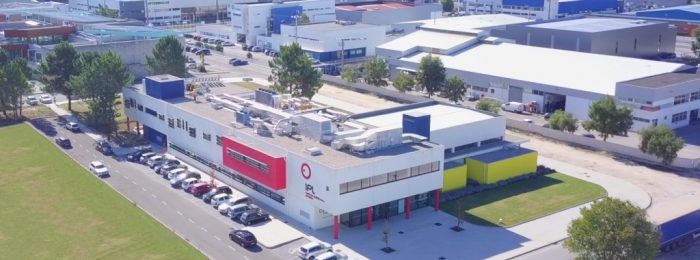
The company OPTIMA has over 16 years of activity, is dedicated to the design, development, production and commercialization of CNC equipment, for cutting, milling, machining and engraving.
OPTIMA, within the scope of the technological surveillance activity it carries out, to the markets in which it operates, identified the growing need / demand for manufacturing processes that allow the production of multimaterial thermoplastic panels with variable thickness.
The consortium led by the company OPTIMA, composed by the companies Periplast specialized in plastics extrusion, Luz Costa & Rodrigues manufacturer of extruded components and supplier of raw materials, GenialImpulso as? End-user? manufacturer of large components for the automotive sector, by ISR-University of Coimbra, University of Minho and CDRsp-IPLeiria as R&D entities, through the MORPHING.TECH project intends to develop a new article / manufacturing process for multi-material polymeric panels with thickness variable, through extrusion processes with configurable die and thermoforming on adaptive surfaces.
The MORPHING.TECH project aims to produce multilayer polymeric panels of variable thickness, with different polymers (engineering materials, recycled and reinforced with natural fibers), for applications in the medical field, furniture, appliances, sports, technical parts, automotive and aeronautics . With the MORPHING.TECH project, the leading promoter, OPTIMA, positions itself as a supplier of innovative products in the field of polymer processing technology.
Objectives: To develop and implement a manufacturing process in which the surfaces that originate molding zones are continuously adaptable and therefore do not depend on long machining processes. The concept is based on the Z-fitting of a stacked array of rods. This adjustment can be performed using servo motorized or hydraulic linear actuators. The dimension in Z of the elementary rods will be based on the 3D CAD design and will be verified in real time through computer vision systems. This process of obtaining molds can be applied to several molding processes, among other applications that are listed in a general way below, and in this project case studies in the field of thermoforming will be explored.
Reference
POCI-01-0247-FEDER-033408
Funding entity
Portugal 2020
Role of ISR
Other
Other participating institutions
Universidade de Coimbra (UC)