
Projects
MUCAEN
Multi-Cam Capsule Endoscopy Imagery: 3D Capsule Location and Detection of Abnormalities
01/01/2018 - 25/07/2022
Research Area
Perceptual and Cognitive Systems
Interdisciplinary Field
Health
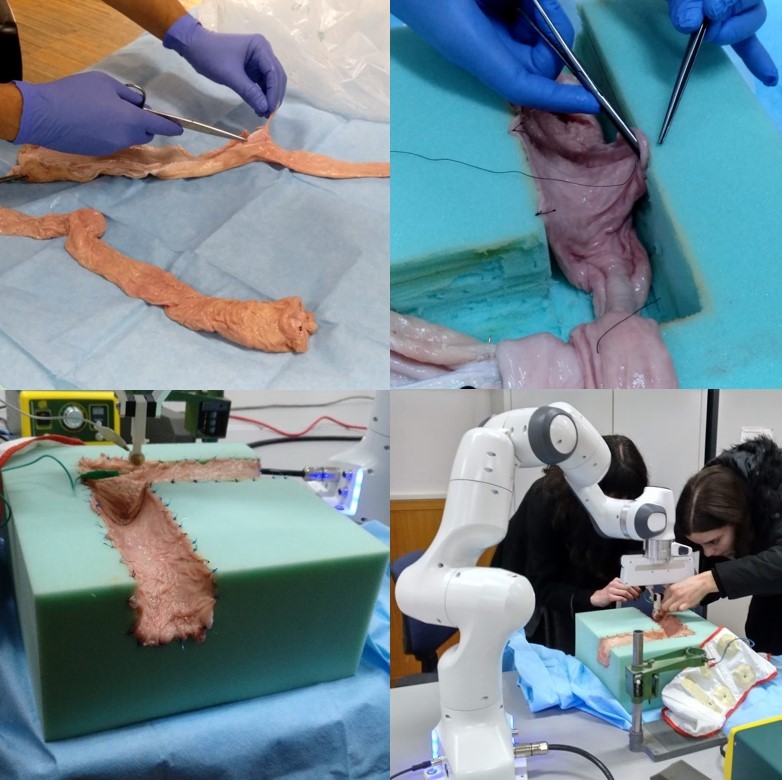
Wireless capsule endoscopy (WCE) is a medical technology, noninvasive, devised for the in vivo and painless inspection of the interior of the gastrointestinal (GI) tract. It is particularly important for the examination of the small intestine, since this organ is not easily reached by conventional endoscopic techniques. It consists of one or more miniaturized cameras, a light sources and a wireless circuit for the acquisition and transmission of signals. In a WCE exam, a patient ingests the capsule, and as it moves through the GI tract, propelled by peristalsis (a contraction of the small intestine muscles that pushes the intestine content to move forward), images are transmitted to a data recorder, worn on a belt outside the body. After about 8 hours, the WCE battery lifetime, the stored images, approximately 50.000 images of the inside of the GI wall, are transferred to a computer workstation for off-line viewing. We will focus on capsules equipped with multiple cameras. Multi-cam capsules allow improved estimation of the 3D localization due to the redundancy, and to the additional geometric and radiometric constraints. Multi-cam capsules allow the full estimation of 3D rotation and translation (including scale). Shape-from-shading and local models of the small bowel and colon will be exploited to constrain the estimates and reduce the uncertainty. Abnormalities will be detected based both on geometric and radiometric models and learning-based approaches.
Reference
POCI-01-0145-FEDER-028960
Funding entity
Fundação para a Ciência e a Tecnologia (FCT)
Role of ISR
Other
Other participating institutions
Universidade de Coimbra (UC)